Unplug to Feel: A Screen-Free Saturdays Guide

Unplug to Feel: A Screen-Free Saturdays Guide

Last week, the 8-year-old that I care for burst into the room and clung onto my legs. She sobbed, “I don’t want mommy and daddy to have COVID.” Her dad had shown symptoms that morning, and her parents, both doctors, were on their way to get tested. Her worry had become so big that it overtook the sense of humor she’d been cultivating recently — fake coughing on her sibling to give her coronavirus, licking my spoon in between bites of ice cream and sniggering, and other ways to mask the real fears that come with this moment. 

All of us are coping in our own ways — as individuals, as family units, as neighborhoods, as towns. Sometimes we don’t even know what we’re feeling until it bursts out of us and we start looking for legs to cling to. This Screen-Free Saturday, take the emotional pulse of yourself and your family. Unplug to hug, to cry, to laugh, to connect. Unplug to feel.

Activity Ideas

During the work week, I am not only buried in screen-heavy work, I think I’ve buried many of my feelings in my screen time. Many of us adults use screen time to cope, and often to meet new child care needs (like allowing extra screen time for our kids in order to get stuff done or to have a moment to ourselves). Whatever your habits during the week, use Screen-Free Saturday as a time to check in about your family’s overall and digital wellness, and to practice and model other ways to be with difficult emotions.

TAKE A PULSE CHECK: Before Saturday, take the Digital Flourishing survey from our colleagues at Digital Wellness Collective to get a sense of where you are in your relationship with technology. Use the results to talk with your family about how things are going and what you might change.

GET GROUNDED: “Self-regulation” is the word we use to describe how we can calm our emotions when we’re feeling all of our feelings. Kids need the grown-ups around them to model and teach them explicitly how to self-regulate — and some of us adults could use a reminder, too!

Breathing exercises: Have you heard of Five Finger Breathing? Breathing up and down while tracing your fingers can help to calm your nerves. It’s a great, concrete tool for kids!

Create a calm space: Sometimes we benefit from a physical space that helps us say “ahhh.” For my 8-year-old friend, this is under her bed, where she keeps a light-up peg board, a few books, and a flashlight. CCFC staff member David’s daughter has a lawn chair and some crafts under their porch. Even in my small studio apartment, I will occasionally string a big blanket over my couch and tuck myself into a temporary calm space. In your kiddo’s space, include activities and ideas for self-regulation, like breathing or yoga prompts, a favorite book, photos of happy times, and maybe a calm jar (see below).

Try meditation: Meditation with kids? It’s possible and really, truly beneficial. This resource from MindBodyGreen offers some ways to get started. 

Make a calm jar: A great Screen-Free Saturday project that can be used wherever is a calm jar. The jar contains sequins, glitter, or other objects that fall slowly when the container is tipped; looking at something like this can help to restore the nervous system! Learn how to make and use one here.

DO A PROJECT TOGETHER: Whether it’s painting the fence in the front yard, starting seeds, building a puzzle, or creating a new art piece for the living room, the act of physically making something for your home and family can help channel emotions and create a sense of competence and autonomy. Especially with teens, don’t force a conversation about emotions during this process — perhaps just share your own and leave space for others to share.

TALK ABOUT IT: One of the best ways to support your family during this time is to create the space to talk about their feelings, experiences, and work to answer their questions. Two of our favorite resources for guiding conversations with young kids come from the Fred Rogers Center and Defending the Early Years.

JUST PLAY: Playing and spending time together are really the best ways to reconnect with your kids and get to know how they are. In fact, for young children, open-ended, imaginative play is the ultimate therapy and a way for them to process their feelings. So, just play! Get on your hands and knees, use your imagination, and be a kid. In fact, our experts say that play is just as helpful for adults; it’s a tool for being present and experiencing, even for just a moment, what it’s like not to worry about the future unknowns. It will be therapeutic for all.

Unplug to Grieve

For every single one of us, COVID-19 has marked a time of loss: whether of a life close to us or a change in routine, a cancelled wedding, or a missed graduation. Read more about grieving during coronavirus and know you’re not alone.

Virus Anxiety

Need tools for addressing your virus-related anxiety? “You’re not in this alone. Listen to meditations, get expert advice, and more with this mental health tool.” But, seriously, you’re not alone. Check out virusanxiety.com for great solutions.

Community Connections

Folks at the Attachment and Trauma Network host an “It’s OK to NOT Be OK” Zoom Room Chat for parents, caregivers, teachers and anyone else working/living around children every Friday from 3-5 PM EST (12-2 PM PST)

National Day of Unplugging has teamed up with Halfthestory, NAMI NYC and Screenagers Movie to bring you a conversation for anyone concerned about the mental health impacts of our increasing use of technology. May 19, 3:00pm PT/6:00pm ET/10:00pm GMT. Learn more and register here.

We hope you have a fun and meaningful Screen-Free Saturday this week! Share your experience with us by replying to this email or tagging us @screenfreeweek on your social media (after Saturday, of course). Join our Facebook page for stories like yours. Your stories help keep our efforts going, so keep them coming!

Happy (or serious, or reflective, or whatever you’re feeling) unplugging. Make sure to stay connected with all of our Screen-Free Saturdays ideas, resources, and fun by taking the pledge:

Unplug to Get Outside: A Screen-Free Saturdays Guide

Unplug to Get Outside: A Screen-Free Saturdays Guide

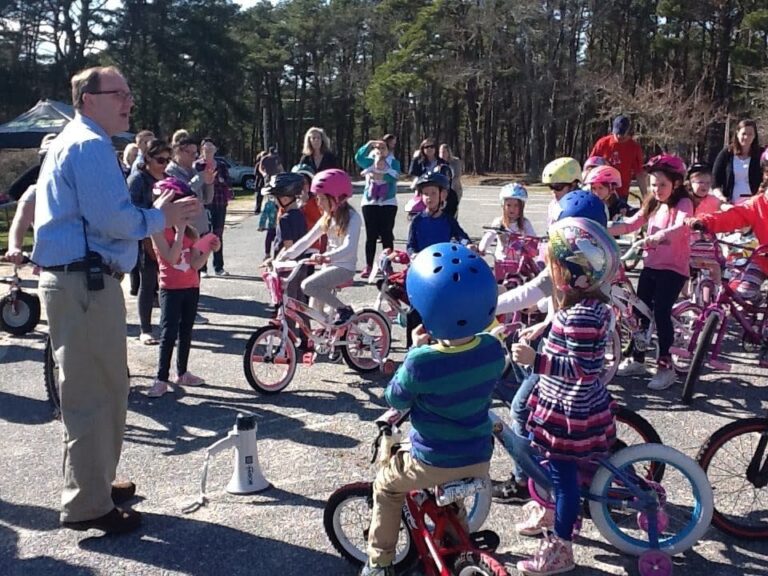
Did you know that even just a view of the outdoors has tremendous benefits for our bodies, brains, and hearts? Getting outside will look a little different this year, and Screen-Free Saturdays are the perfect opportunity to explore new outdoor adventures. Join us as we unplug to get outside this week!

Also, a quick update: this will be our last full weekly Screen-Free Saturdays e-mail! To help reduce the digital noise, we’ll be sending emails just once or twice a month. For inspiration in the meantime, we’ll keep sharing ideas on our Facebook page, creating resources, and answering your questions. We hope Screen-Free Saturdays become a weekly tradition for you and your family! 

Now, get outside! 😉

55 Nature-Related, Screen-Free Activities

Public health regulations are all over the map right now when it comes to access to public parks, deep trail hiking recommendations, and even walking around the neighborhood — but kids need to be outside! To help, we compiled a list of 55 Nature-Related Screen-Free Activities for quarantine and beyond.

– Go for a stroll.
– Lay in the grass.
– Find a tree to read under.
– Jump in a puddle.
– Venture down a street you’ve never gone down.
– Discover a rooftop garden nearby.
– Plant seeds and help them grow.
– Bring a basket on your walk. Collect beautiful things from nature.
– Pull weeds from the sidewalk/yard/garden.
– Wash the car, bike, or a neighbor’s car.
– Find a building with plants growing on it.
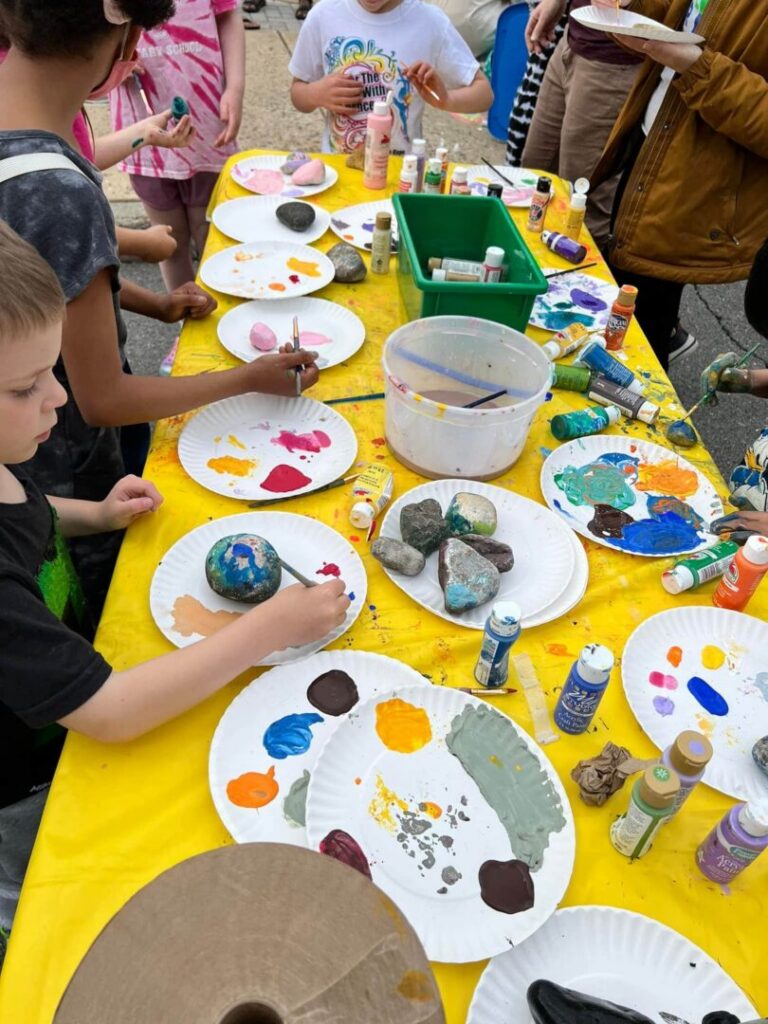
– Go for a rock hunt. Compare sizes, colors, weights, & shapes.
– See how many different colors you can find on a walk/out the window.

For more on accessing nature while physical distancing, we like what our friends at Sierra Club have to offer: “You can reap many of the benefits of nature without traveling, and the best way to observe public health guidelines right now is to stay home, visit the local parks and trails in your community (if they are still open), and bring nature inside.”

Kids to Parks Day

Our Screen-Free Week endorsers at the National Parks Trust celebrated Kids to Parks (now Parks to Kids) Day on May 16, and have tons of great resources! Their fun BINGO activity and ways to connect to nature on a small scale work great whether you’re in the forest or looking out your apartment window. View all of their resources here.

Finding Nature

Screen-Free Week Endorsers Children & Nature Network have launched an exciting new project! FindingNature.org is dedicated to helping kids and families stay connected to the outdoors during the pandemic. Check out their resources, which are focused on equitable access to nature, here!

Community Connections

Now more than ever, we need to practice using imaginative hope to think seriously about how to create a healthier, nature-rich, more equitable civilization in the years to come.
Rich Louv, Author and Co-founder of the Children & Nature Network

One thing that we’ve learned from the pandemic is that nature access looks very different depending on where you live and how many resources you have. Around the U.S., safe outdoor spaces are often inaccessible to communities of color, people with disabilities, LGBTQ+ people and other marginalized groups. Enter UnlikelyHikers podcast: a community of outdoors enthusiasts who are committed to breaking down barriers for getting outside!

 Make sure to stay connected with all of our Screen-Free Saturdays ideas, resources, and fun by taking the pledge:

Unplug to Cook: A Screen-Free Saturdays Guide

Unplug to Cook: A Screen-Free Saturdays Guide

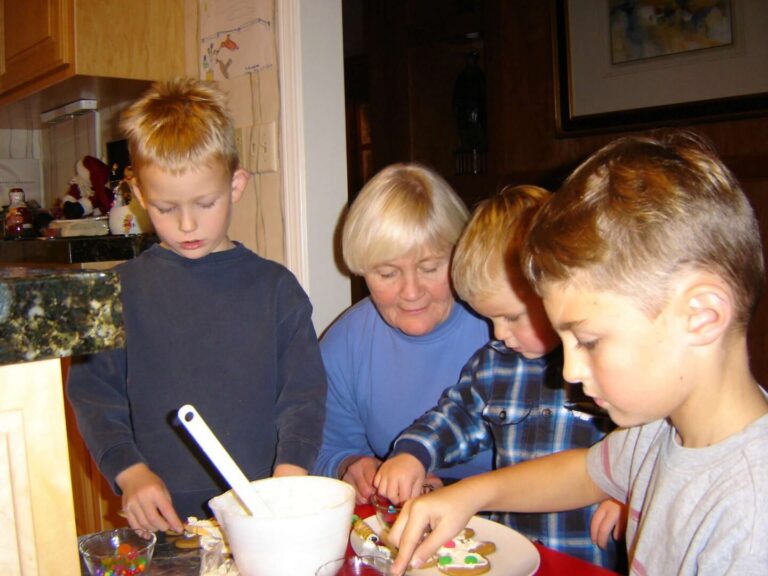
On your next Screen-Free Saturday, UNPLUG TO COOK, eat, forage, share a meal, or try a new recipe! Maybe you need to use up those veggies before they take their last turn, or maybe you’ve already got a weekly baking ritual like 24/6 author Tiffany Shlain – Screen-Free Saturdays are a perfect time for a culinary adventure. Whether you’re in the kitchen, busting out the barbecue, or setting up a camp stove in the backyard, take some time this week to enjoy a very yummy day with your family.

What’s Cookin’?

Cooking with kids can be a daunting task if it’s not already part of your parenting practice, but even the tots can participate in the kitchen!

  • 0-3 year-olds can stir along with you and on their own, pour, press buttons, count, or wash veggies. Smelling spices and “cooking” with their own pots and pans on the floor are often a big hit, too!
  • With careful observation, 4-5 year-olds can stir, mix, crack an egg, add water to the pot, measure and add ingredients, knead, or wash vegetables.
  • 5-8 year-olds can learn to chop, grate, and peel with close supervision. This is also a great age to introduce cutting with scissors, mix in different ways, grease pans, set timers, collect the ingredients, read the recipes, or help plan the meal.
  • With supervision, 8-13 year-olds can follow a simple recipe, boil water, chop/grate/peel, use a hand-held mixer, heat and move things in or out of the oven with mitts, and prepare salads and pastas.
  • High schoolers are ready for the next level! They’ll benefit from “home ec” style opportunities to learn knife skills, cooking techniques (saute, mince, poach, grill), and try out new recipes.
  • Young adults? True sous chefs! They can do it all, but benefit from reminders to clean up their messes.

There are also so many opportunities for learning and development while cooking together: small muscle (fine motor) strength, following directions and managing multiple steps, math (measurement, addition/subtraction/multiplication/division), chemistry, and more!

Of course, you know your child’s needs best, so meet them where they are. I have worked with 8-year-olds who have independently whipped up falafels and 13-year-olds who are only comfortable cutting with the edge of a spoon.

For additional information about cooking with kids, we like this article from the BBC.

Kids’ Weekly Menu

This week, the 11-year-old in my house was tasked with creating a dinner menu for the rest of the week. With expectations around having some vegetables in each meal, she artfully crafted seven days of dinners!

The best part? When kids have buy-in into the menu, they are more likely to eat it up with fewer complaints! We all could use more of that.

SFS Cookbook

As you print or write the recipes you need for your day away from the screen, consider building a collection of family recipes! These can be unique to the ones you try out on Saturdays or they can be favorites to go to whenever you need to whip something up.

To help you collect your recipes, we’ve provided a recipe page template and cookbook cover to print or copy! You can check it out here!

Community Connections

Check in with your neighbors

Unplugging to cook can be a real privilege, and a great way to support your community’s food needs! This weekend, consider:

  • Starting a Little Free Pantry: Learn more | Learn about what people have done in cities like Seattle, where COVID hit hard
  • Contacting your local food banks: Most food banks and pantries are still operating and need specific types of support based on community needs. Look up the food bank near you this week to see if there is a way to support it!
  • Checking in with your schools: COVID-19 has put many of our students experiencing hunger at an even greater risk of food insecurity. School systems are working around the clock to be able to continue to serve meals and support families, but their funding is running out. Contact your local school district to see what’s most useful at this time!

May this Screen-Free Saturday be DEEEELICIOUS. Make sure to stay connected with all of our Screen-Free Saturdays ideas, resources, and fun by taking the pledge:

Screen-Free Week 2020 is postponed

Screen-Free Week 2020 is postponed

After discussing as a staff and talking to hosts, organizers, and participants, Campaign for a Commercial-Free Childhood has decided to postpone Screen-Free Week 2020.

Last year, more than 150,000 people celebrated Screen-Free Week in more than 1,000 celebrations around the world. Now, as more and more communities begin to practice social distancing and with no clear end in sight, it simply doesn’t make sense for us to plan a week based in global, face-to-face community celebration. We are still deciding whether or not it makes sense to try to plan events for the fall, but for now, we can say with certainty that Screen-Free Week will not take place from May 4 – 10.

For nearly ten years, Screen-Free Week has functioned as a kind of container: a week with different rules and expectations, where children and families are invited to step back from screen-based entertainment and rediscover the joys of imagination, play, nature, and community. During Screen-Free Week, our daily lives have a different rhythm. There is more time to breathe, to see, to notice, to feel.

Now, though, it’s COVID19 that has given our lives a different rhythm. As school, work, and socializing move online, it is more important than ever that we are intentional about our relationships with screens, and that we make time for the offline play, joy, and relationships that are instrumental to children’s (and our own) wellbeing. CCFC is committed to keeping the spirit of Screen-Free Week alive throughout this period of rapid change. As we find ourselves quarantined, with all this new time on our hands, there is incredible trepidation and uncertainty. But there is also incredible opportunity to find new ways of being.

Moving forward, the Screen-Free Week team at CCFC will be focusing on creating and sharing resources families can use every day as they navigate quarantine, social distancing, and COVID19. The first of these resources is our two-part webinar series with early childhood educator Nancy Carlsson-Paige, pediatrician Mark Bertin, and psychologist Teadora Pavkovic. Part one, on March 23, is for parents and caregivers of children under 6. Part two, on March 26, is for parents and caregivers of kids 6 – 12. We hope that you can join us for one or both of these events, which will offer in-depth conversations about helping children thrive in a time of great uncertainty. (And, yes, we will talk about working from home while your kids are home!)

Thank you so much for being a part of Screen-Free Week. Your community and family celebrations are at the heart of our work, and we’ll deeply miss hearing about them this May. We’ll be in touch soon with more information about rescheduling public events, and more strategies for building meaningful connection in this rapidly shifting moment. Until then, we hope you’ll continue to use our resources to find the screen-free time and space it takes to dream big, show care, and imagine new possibilities for the future.

Here’s to unplugging,

Josh, Jean, Rachel, Rinny, Sam, Melissa, and David
Campaign for a Commercial-Free Childhood