Why I (Still) Read Aloud to My Kids

Why I (Still) Read Aloud to My Kids

Screen-Free Week Outreach Coordinator Rinny Yourman tells us why reading aloud is such an important tradition in her family, especially as her children grow up.

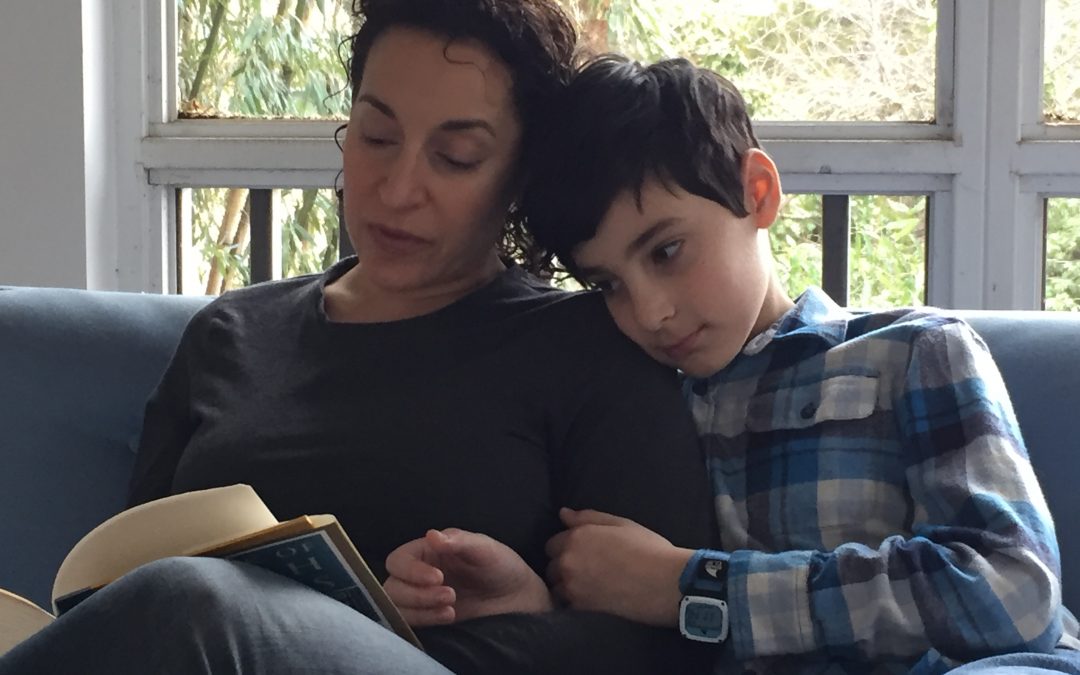
I have a confession to make: I have a teen and a preteen, and I still read books aloud to them. I think it’s because reading aloud to my children has become one of the deepest pleasures of parenthood for me. While I secretly love so many of the children’s books I’ve chosen to share with each of my children, I also revel in the sweet, private duet that seems to play out when my child and I are sharing a book aloud, together.

We started reading picture books to our children when they were babies, long before they could comprehend what they were looking at or what we were saying. Still, I think they enjoyed the combined sweetness of my singsong reading voice while enwrapped in my arms or perched on my lap.

While we read to our young children during the day, eventually we also started reading books before naps and bedtime. Reading aloud simply insinuated itself into our family’s sleepytime routine, and even after naps were dropped, our nightly reading habit persisted. I think bedtime proceeded more smoothly as a result, a mix of anticipation combined with the comforting sense of routine. Even after our children learned to read on their own – and they read on their own nearly every day – we continue to read to them too.

These days, there are no screens involved in our read alouds – we read from books – and indeed, there are no screens anywhere nearby. I read to my kids in various locations in and even outside the house, before bed or during lulls in the day, and they and I know that when I read to them, we have each other’s rapt attention. As I watch our children slowly assert their independence from us, I know that the read-alouds keep them gently rooted to their parents as well.

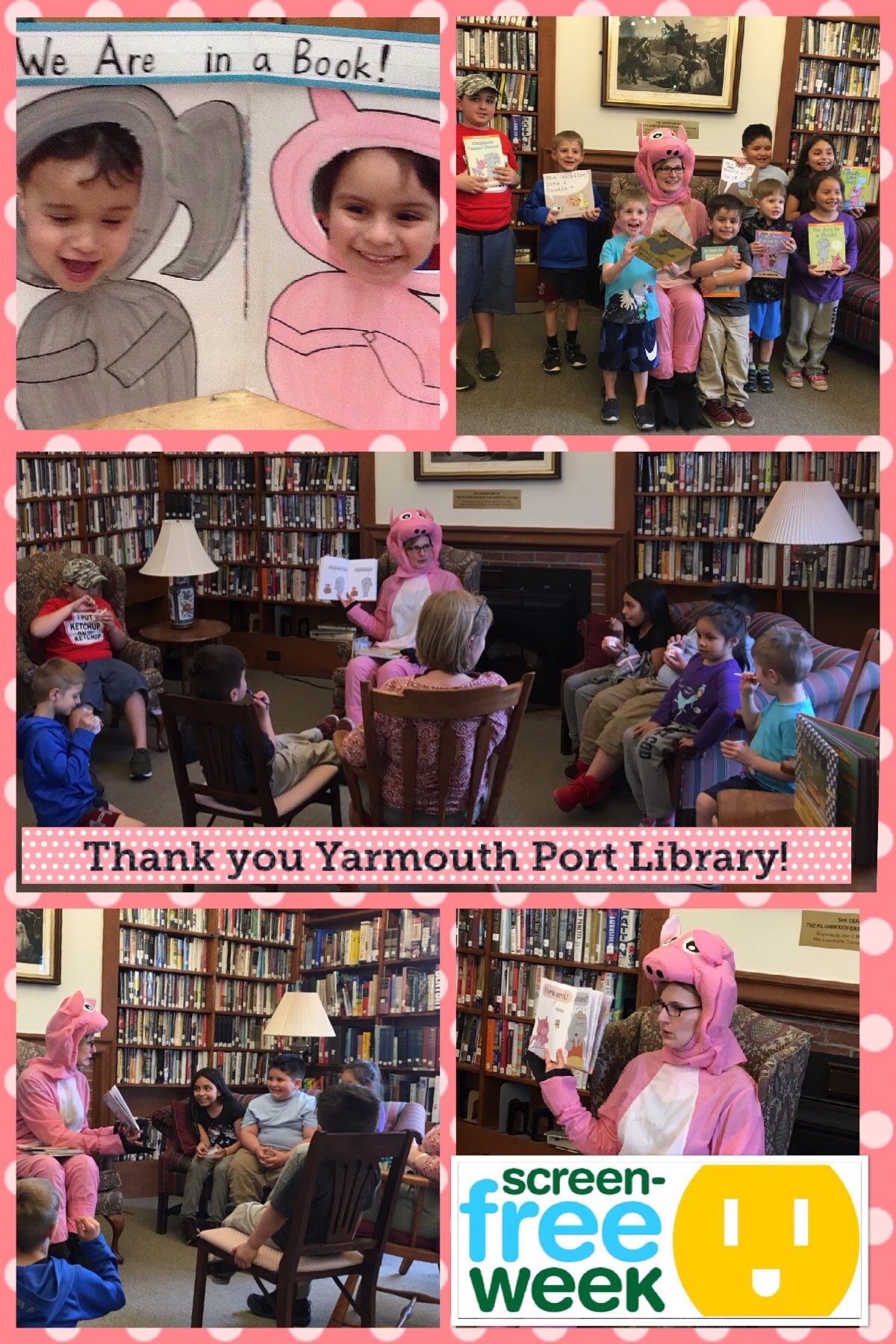
Reading aloud to a child – whether by a parent, caregiver, grandparent, older sibling, teacher, librarian, or friend – is a meaningful screen-free activity at home and at school. For those not yet in the habit of doing so, Screen-Free Week is a great time to launch a read-aloud routine, no matter the age of the child.

Screen-Free Week 2019 is April 29 – May 5. Make sure you register your event here!

Smiling woman with curly hair standing against a brick wall.

Rinny is Outreach Coordinator for Screen-Free Week, where she works with families, schools, and communities to help them organize meaningful and fun Screen-Free Week celebrations that can inspire reduced screen use year round. She and her family have celebrated Screen-Free Week for years, and enjoy screen-free road trips together.

Screen-Free Week 2018 was bigger and better than ever!

Screen-Free Week 2018 was bigger and better than ever!

What a week! From San Diego to Sydney, kids families and communities unplugged for Screen-Free Week 2018. And not only did they survive, they had a blast!

Here’s what we’ve heard:

  • Kids were more active
    They scaled rock climbing walls, jumped rope, wiggled on jungle gyms, hiked, danced, and got their feet wet at the beach. Students at the Margaret E. Small Elementary School on Cape Cod saddled up for their first bike rodeo! It’s the second year the school has celebrated big with the school nurse, guidance counselors and teachers working hard to make it a meaningful week.
  • Kids were more creative
    They painted, created cardboard structures, played board games, language games and math games. Anthony from Hyde Park New York said, “…when my house had no TV, computer and video games, all I did was read. Until one day I dreamed big about becoming a writer… Lovito read gave me an idea to write my own book…it made me happy.”
  • Kids used their extra time to help others
    Students at Warrenton Middle School in Virginia kids made cozy blankets out of donated felt to bring to pediatric cancer patients. “We’ve even had teachers sign the pledge,” said Linda Hume, a seventh-grade language arts teacher at the school.
  • Kids came up with their own ideas
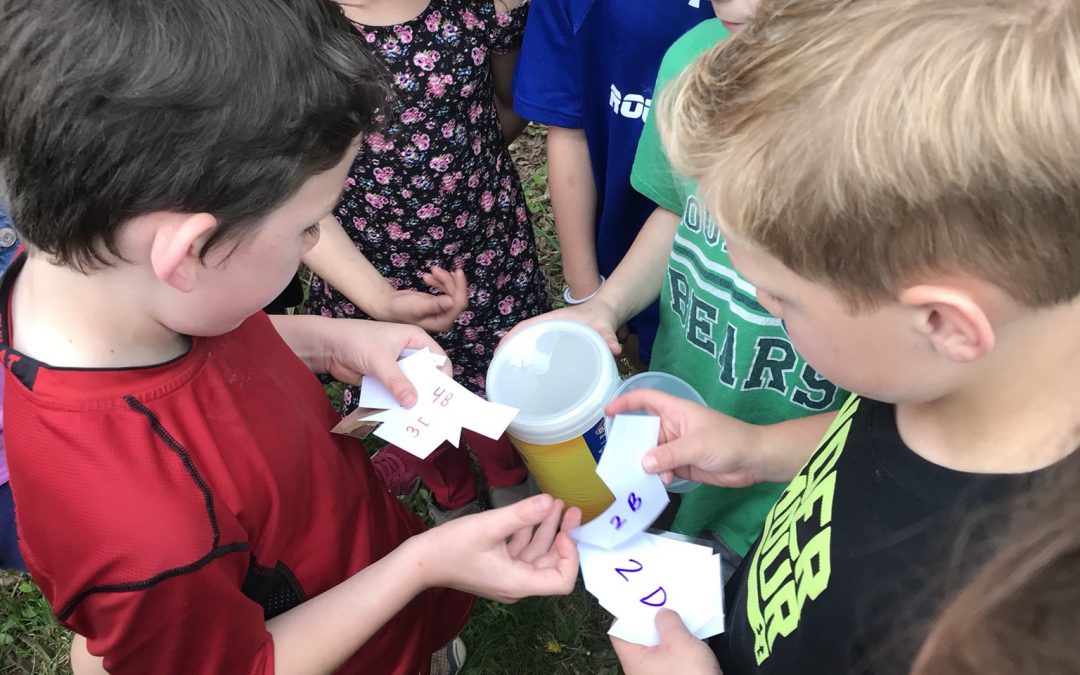
    At Fayerweather Street School in Cambridge, Massachusetts, kids wrote cards with all the different activities they wanted to try on Screen-Free Week.
  • Kids were proud of their achievement
    Screen-Free Week also helps children achieve a goal, while trying out all kinds of unplugged ways of being. Classes at the Parent Center School in Salinas, California, couldn’t wait to hold up their certificates for a photo.

Making Screen-Free Week last

For many families and communities, Screen-Free Week is a springboard for assessing their relationship with media and making lasting changes.  Here are some ways to bring Screen-Free Week into your year ahead.

  • Make a family media plan – the American Academy of Pediatrics (AAP) Family Media Plan can help families devise a family plan that meets their needs and values.
  • Take the Wait Until 8th pledge with other parents to wait until least until eighth grade to give a smartphone to your child.
  • Try Device-Free Dinners  – with everyone’s screens out of the way, families can enjoy conversation at the table.
  • Improve sleep by setting bedtime limits – the AAP recommends that children’s bedrooms be screen-free at night and that screens are turned off at least one hour before bedtime.
  • Make a screen-free day or evening a regular part of your family’s routine – and stick to it!

And Save the Date for Screen-Free Week 2019: April 29 – May 5!